From $2M to $10M: Building the Operating System Behind Clean Valley Water's Growth
How a fractional-COO approach to operations, financing, and marketing took a regional home services company from 10 employees to 45 — without losing control of the business.
Annual Revenue
Employees
Growth, Same Ownership Team

Real demand. The wrong operating system.
Clean Valley Water was a growing water treatment company with real demand, a solid reputation, and the classic problem that hits every home services company somewhere between $2M and $5M in revenue: the systems that got it there couldn't take it further. Sales reps operated on tribal knowledge. Financing decisions were made deal-by-deal, without leverage. Marketing spend was mostly instinct. There was no administrative bench to absorb growth, and nothing written down for a new hire to learn from.
This is the exact bottleneck most HVAC, plumbing, electrical, and other home services owners hit when they try to scale past an owner-run shop. The work is there. The operating system to carry it isn't.
Nine operational pillars.
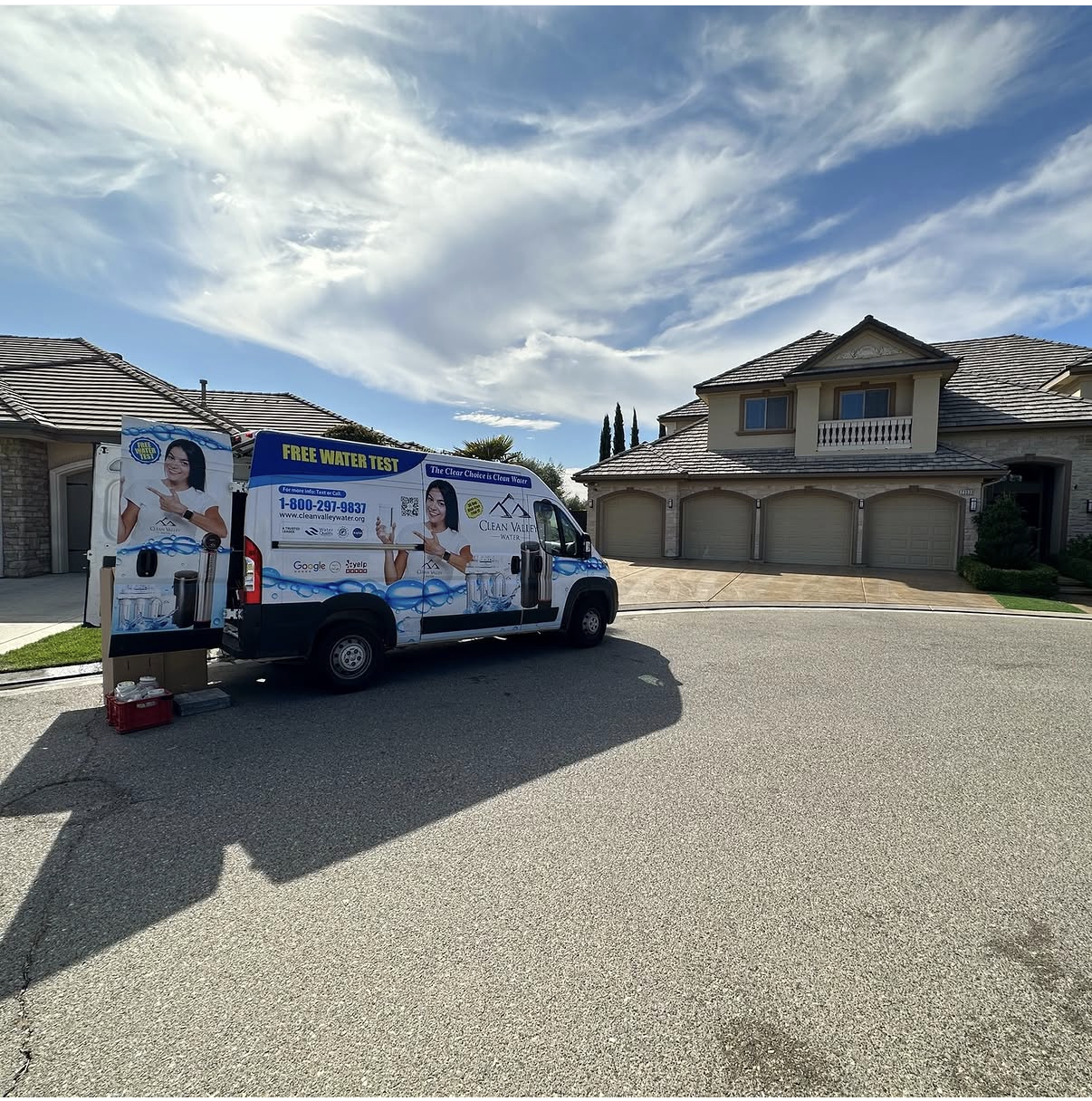
As Head of Operations, Gustavo Silva took over full P&L ownership and rebuilt the business function by function. None of this was a single initiative — it was nine interlocking systems built and run in parallel:
A Remote International Administrative Team
Built a college-educated, remote administrative team to take on scheduling, follow-up, and back-office operations — giving the company enterprise-level administrative capacity without enterprise-level overhead, and freeing field leadership to focus on installs and sales.
Direct Bank Financing Relationships
Built direct relationships with local banks to secure customer financing at rates competitors couldn't match. Better financing terms became a closing tool in the field — strong enough to price out competing finance offers and, in a number of cases, take the sale outright from competing businesses.
Manuals and SOPs That Didn't Exist
Wrote the operating manuals and sales playbooks from scratch — for installers and for sales reps — turning tribal knowledge into a repeatable onboarding and performance standard the company could actually scale on.
A Culture of Teamwork Between Reps
Rebuilt the culture on the sales floor around collaboration and mutual respect between reps, replacing the zero-sum, cutthroat dynamic that typically caps growth in commission-driven sales teams.
New Equipment Design and Marketing Materials
Led the redesign of equipment presentation and sales/marketing materials, giving reps a more professional, more persuasive package to sell against larger, better-funded competitors.
GPS Territory Mapping and Targeted Google Ads
Replaced guesswork lead generation with GPS-based territory mapping and targeted Google Ads in key areas — concentrating ad spend and field time where it actually converted.
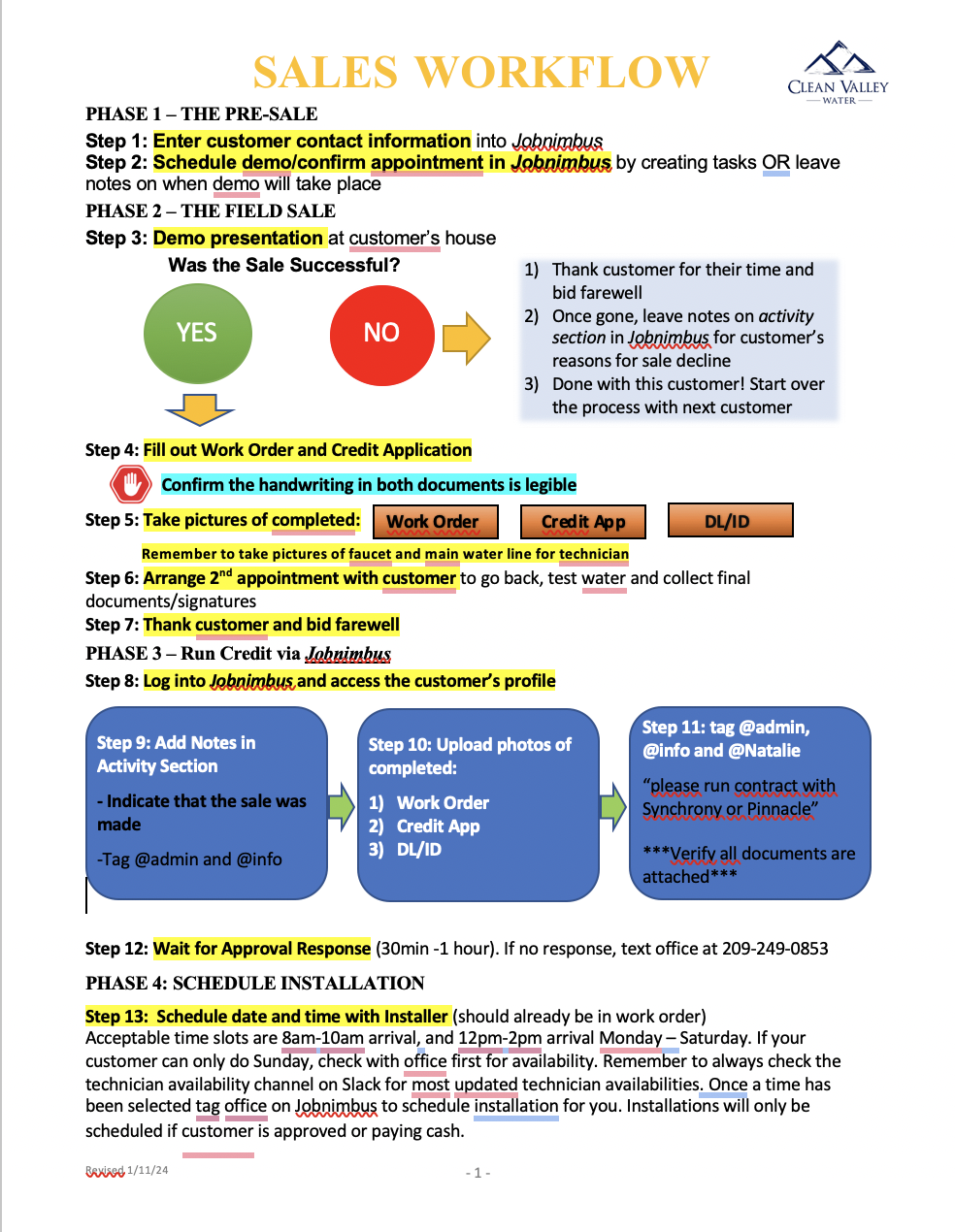
Visual, Easy-to-Follow Sales Workflows
Designed clear, visually mapped-out workflows that walked reps step by step through the sales process — replacing scattered verbal training with a process every rep, new or experienced, could actually follow and repeat.
The Company's First Employee Benefits Program
Built the company's first employee benefits program — health, dental, and vision insurance plus standardized PTO rules — turning an owner-run shop into a place employees could actually build a career, and giving the company a real hiring advantage in a tight labor market.
A Sponsored Visa Program for International Talent
Stood up a successful sponsored visa program for remote international employees, opening a talent pipeline most home services companies never tap and giving the company access to skilled people competitors couldn't reach.
Growth was the proof that the systems held.
Revenue grew from roughly $2M to $10M. Headcount grew from 10 to 45. Growth of that speed normally breaks a small business — it exposes every process that was never written down and every deal that was never systematized.
Here, growth was the proof that the systems held: financing that beat the competition, reps who worked as a team instead of against each other, marketing that targeted real demand instead of hoping for it, and an admin backbone that scaled with the field team instead of falling behind it.
None of that gets fixed by working harder — it gets fixed by building the operating system underneath the business.
If your business is between $2M and $10M, the pattern above is very likely already showing up: reps who've never had a real playbook, financing conversations you're losing to a competitor down the street, marketing spend you can't fully account for, and an admin function that's one hire away from falling over. It gets fixed the same way it was built here.
OpsForce Enterprises
We build that system for you as a fractional COO — without the cost of a full-time executive hire.